How to Choose the Right Dry Transformer for Your Application?
Choosing the right dry transformer for your application involves careful consideration. Dry transformers serve critical roles in electrical distribution. They offer numerous advantages, including safety and efficiency. However, selecting one can be a daunting task.
Not all dry transformers are created equal. The right choice depends on specific needs and requirements. Factors like voltage ratings, capacity, and efficiency must be evaluated. One might feel overwhelmed by the myriad of options available. This choice could greatly affect system performance.
Understanding your application’s demands is crucial. Seek advice from experts or do thorough research. Mistakes in selection can lead to performance issues or unnecessary costs. A well-chosen dry transformer contributes to operational excellence and reliability. In the end, it’s about finding the best match for your unique situation.
Understanding the Basics of Dry Transformers and Their Applications
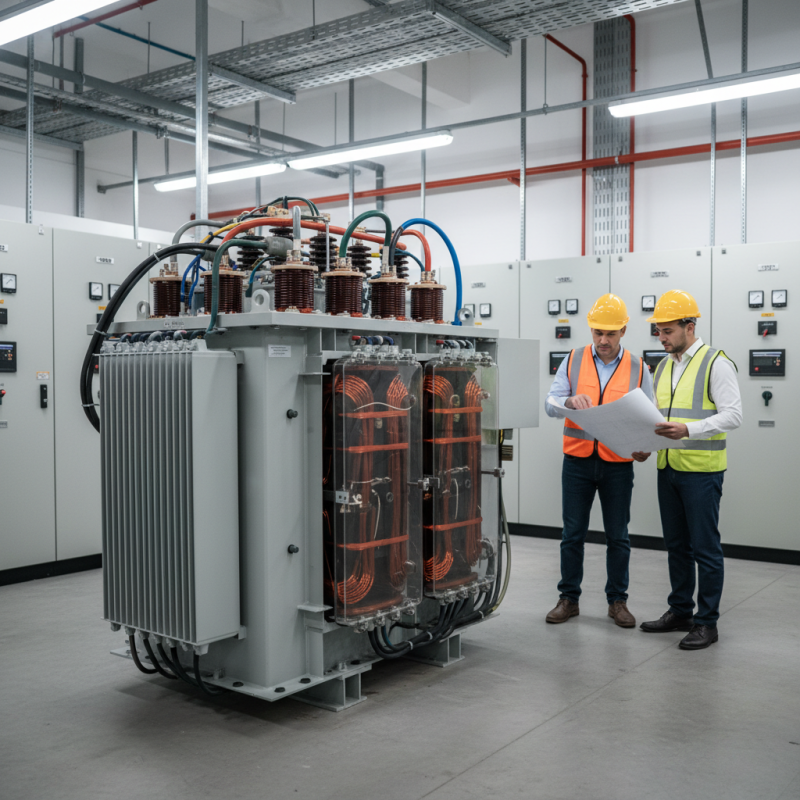
When considering dry transformers, it’s essential to understand their core functions and applications. Dry transformers are commonly used in various sectors, including industrial, commercial, and renewable energy systems. They use air as a cooling medium, making them environmentally friendly. These transformers have insulating materials that are non-flammable, enhancing safety in installation.
Tip: Assess your voltage requirements and load types before selecting a dry transformer. This ensures compatibility and efficiency.
In some applications, dry transformers can be less efficient than oil-filled types under certain conditions. Even so, their low maintenance needs often offset this downside. It’s crucial to evaluate the high initial cost versus long-term savings when making a decision.
Tip: Always consider future expansion. A transformer that meets today’s needs may not suffice tomorrow. Seek flexible solutions that allow for upgrades.
Evaluating Load Requirements: Sizing Your Dry Transformer Appropriately
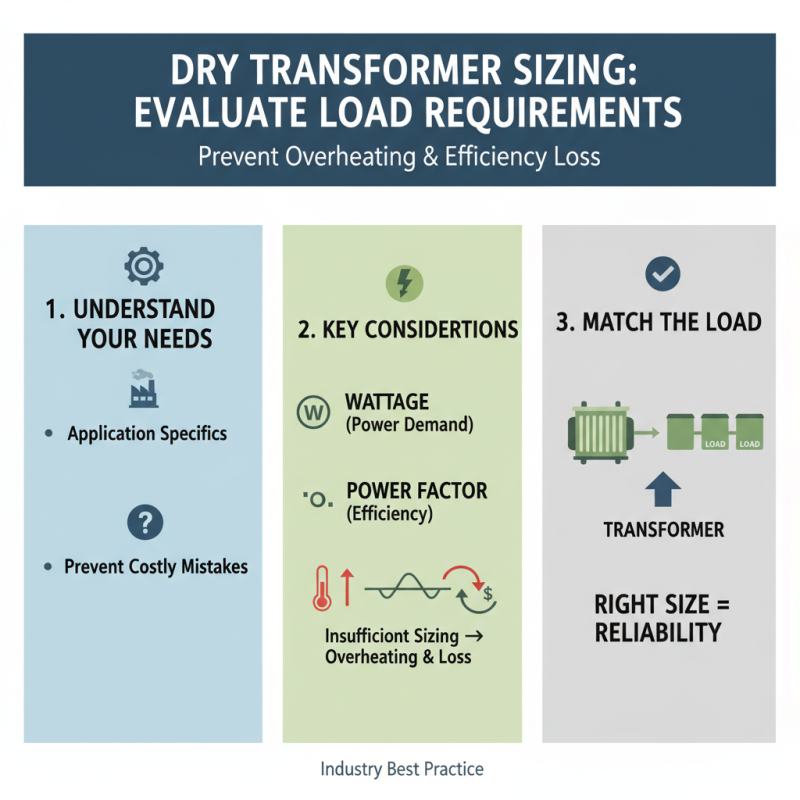
When choosing a dry transformer, evaluating load requirements is critical. Understanding your application's specific needs can prevent costly mistakes. According to industry reports, insufficiently sized transformers can lead to overheating and efficiency loss. A dry transformer should match the load, considering both the wattage and the power factor.
Calculating the total wattage is essential. Gather the total load in kilowatts (kW) from all equipment using a transformer. It's often recommended to add an extra 20-25% to accommodate future load increases or unexpected surges. Many facilities underestimate these figures, which can result in operational failures.
Moreover, consider the type of loads. Resistive loads behave differently than inductive ones. Transformers may need different ratings for these variances. Failure to account for these nuances can have serious implications. Ultimately, user demands can shift over time. Regularly reassessing your transformer size is vital to maintain efficiency and reliability in your operations. This ongoing assessment shouldn’t be overlooked.
Key Efficiency Ratings: How to Assess Transformer Performance
Choosing the right dry transformer involves understanding efficiency ratings. Efficiency is crucial for performance. Higher efficiency means less energy wasted. This impacts operational costs significantly. For any application, check the transformer’s efficiency percentage. Ideally, select a unit with at least 95% efficiency. But remember, this is not a one-size-fits-all situation.
Consider the load characteristics for your transformer. Some applications require quick response times. Others focus on sustained performance under varying loads. Efficiency ratings vary based on these factors. A mismatch can lead to underperformance or even damage. It’s important to reflect on the specific demands of your application. Sometimes, the best choice isn’t the highest efficiency. It could be a better match to your load profile.
Always consult performance curves when evaluating transformers. These curves provide insights into how performance fluctuates with load. A high-efficiency transformer may not always perform well with peak loads. Understanding these dynamics is key. Test the units under real operational conditions if possible. The perfect transformer balances efficiency and application requirements. Sometimes, that balance is difficult to achieve.
Environmental Considerations: Choosing Transformers for Specific Conditions
When selecting a dry transformer, environmental considerations are crucial. Transformers may operate in various conditions, which can affect their efficiency and longevity. For instance, a report by the Electric Power Research Institute highlights that transformers installed in high-temperature areas may face overheating issues. This can lead to reduced efficiency and increased failure rates, sometimes exceeding 25% over a decade.
The location also plays a vital role. Moist environments can lead to insulation degradation. A study by the Institute of Electrical and Electronics Engineers (IEEE) indicated that humidity levels above 80% significantly reduce the lifespan of transformers. Addressing these factors is essential. You may need special coatings or materials to protect against moisture.
Noise levels should not be overlooked either. In residential areas, transformers can disrupt daily life. According to the World Health Organization, consistent noise levels above 55 dB can impact health. Therefore, installing transformers with lower noise emissions is beneficial. Reflect on these details carefully; an informed choice can prevent future complications and enhance operational reliability.
How to Choose the Right Dry Transformer for Your Application? - Environmental Considerations
| Transformer Type |
Environment |
Key Features |
Temperature Range (°C) |
Humidity Tolerance (%) |
Noise Level (dB) |
| Class A |
Indoor |
Low noise, energy-efficient |
-10 to 40 |
30-85 |
< 50 |
| Class B |
Outdoor |
Weatherproof, robust design |
-20 to 50 |
10-100 |
< 60 |
| Class C |
Industrial |
High durability, low maintenance |
-30 to 60 |
20-90 |
< 70 |
| Class D |
Harsh Environments |
Corrosion resistant, advanced cooling |
-40 to 70 |
5-95 |
< 75 |
Regulatory Standards and Compliance in Dry Transformer Selection
When choosing a dry transformer, regulatory standards must not be overlooked. Compliance with local and national regulations ensures safety. These regulations cover
electrical safety, efficiency, and environmental impact. The right transformer aligns with codes like IEEE and NEMA. These guidelines help in assessing
performance and reliability.
Every application has unique demands. It's important to research relevant standards. For example, hospitals may have stricter requirements compared to commercial buildings. Manufacturers
often provide specifications to meet these standards. Yet, there's a need for careful verification. Not all specifications guarantee performance in real conditions.
Selecting a transformer also requires considering the installation environment. Locations may have specific codes for
fire safety or noise. Some areas may even have special energy efficiency regulations. Balancing these factors can be challenging. It's vital to assess
both technical requirements and compliance needs. This ensures the chosen transformer performs as expected and stays within legal guidelines.