Leave Your Message

2026 Best Control Transformer Types for Global Buyers

The 2026 market for Control Transformers is being shaped by electrification, factory automation, and stricter equipment-efficiency expectations. The International Energy Agency’s Electricity 2024 report forecasts global electricity demand growth of approximately 3.2% annually from 2024 to 2026. That growth supports new motor-control panels, processing lines, renewable-energy systems, and commercial facilities. Each application needs stable control voltage, dependable isolation, and predictable performance under real operating conditions.

The best transformer type depends on more than rated VA capacity. Open-frame models suit protected control cabinets and cost-sensitive installations. Encapsulated transformers offer stronger resistance against dust, vibration, and moisture. Isolation transformers can reduce electrical noise and separate sensitive circuits. Three-phase designs may improve integration in larger industrial panels. IEC 61558-2-2 provides a recognized safety framework for control transformers, while IEC 60204-1 remains important for electrical equipment used in machinery. Buyers should also verify UL, CSA, CE, or other applicable conformity requirements for the destination market.

Small details matter. A 480-volt primary, 120-volt secondary, 50/60-Hz supply, and 150 VA load can change the selection completely. Ambient temperature, inrush current, mounting space, terminal protection, and short-circuit coordination deserve equal attention. Industry forecasts from MarketsandMarkets and Grand View Research indicate continued growth in transformer-related demand, although their market boundaries and estimates differ. That inconsistency deserves caution. No single type is best everywhere. This guide compares the leading Control Transformers for 2026, using technical standards, manufacturer practices, and practical purchasing considerations to support safer, more reliable global decisions.
2026 Best Control Transformer Types for Global Buyers

Control Transformer Fundamentals and Their Role in Industrial Systems

A control transformer is a compact power device used to supply control circuits in industrial equipment. It converts a higher incoming voltage into a safer, usable control voltage. Common secondary outputs include 24, 110, and 230 volts. Its windings also provide electrical isolation between the supply and control circuit.

In an industrial cabinet, the transformer powers relays, contactors, sensors, timers, and operator interfaces. This separation can reduce fault energy reaching delicate control components. It also helps maintain stable voltage when motors start or contactors close. During commissioning, I check the transformer voltage while the largest coil operates. A no-load reading can be misleading.

Correct sizing requires more than matching the stated voltage. Engineers should calculate the combined VA demand of coils, lamps, sensors, and future expansion. Inrush current matters too. A transformer with little reserve may overheat or cause nuisance fuse operation. That assumption deserves review.

For global projects in 2026, buyers should verify primary voltage taps, frequency, insulation class, enclosure conditions, and applicable safety standards. Ambient temperature and cabinet ventilation affect service life. Terminal markings must remain clear after installation. Ask for routine test records, wiring data, and temperature-rise information. These details support traceability and safer maintenance across different sites. A technically suitable transformer may still fail when documentation, spare protection, or local installation practices receive too little attention.
Key Control Transformer Types Available to Global Buyers in 2026

2026 Best Control Transformer Types for Global Buyers

Key Control Transformer Types Available to Global Buyers in 2026

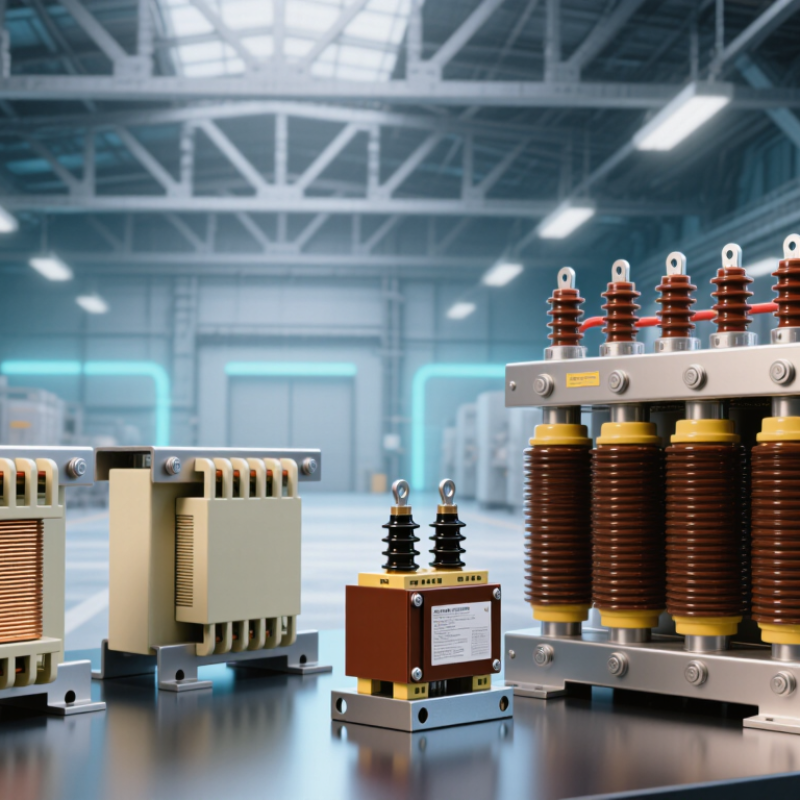
Global buyers can choose from several control transformer types for industrial panels, machines, and building systems. Single-phase models suit compact control circuits and moderate loads. Three-phase transformers support larger equipment and balanced power distribution. Dry-type construction remains popular because it needs no liquid maintenance. It also fits indoor installations with limited space.

Encapsulated transformers offer stronger protection against dust, moisture, and vibration. Open-core designs can reduce cost and simplify inspection. Isolation control transformers separate sensitive circuits from supply disturbances. They can improve safety and reduce unwanted electrical noise. Oil-immersed units may suit demanding outdoor or high-capacity applications, but installation requirements become more complex. Check this carefully.

Tips: Confirm primary and secondary voltages, frequency, VA capacity, insulation class, and terminal arrangement. Compare IEC, UL, CSA, or local certification needs before ordering. Ask for temperature-rise data and tested short-circuit performance. A small voltage mismatch can damage connected controls. It is easy to overlook in fast purchasing cycles.

Buyers should also review enclosure ratings, ambient temperature, mounting space, and replacement access. A transformer rated for 50 Hz may require verification in a 60 Hz system. Some specifications look acceptable on paper, yet fail during startup surges. Leaving a practical safety margin is wise, though excessive sizing increases cost and cabinet space. Supplier documentation should include drawings, test records, and clear operating limits.

How to Match Transformer Types with Voltage, Load, and Application

In 2026, control transformer selection starts with the real voltage, not the catalogue label. Confirm the available primary voltage, frequency, and permissible variation at the installation site. A 400 V supply may not remain stable during motor starting. Choose a transformer with a matching primary connection and a secondary voltage suited to the control circuit, such as 24 V for safer machine controls. Isolation transformers improve separation between supply and control wiring. Autotransformers can reduce voltage efficiently, but they do not provide galvanic isolation.

Load calculation needs more than adding nameplate values. Add the holding current of contactors, relays, valves, sensors, and indicator lamps. Then include inrush current, especially when several contactors close together. Select the VA rating with practical reserve, often 20–30 percent after verified calculations. Do not guess. A small transformer may overheat, produce nuisance trips, or cause contactors to chatter. I have seen quiet test panels fail when a cold solenoid operated alongside the main motor starter.

Application conditions can change the correct type. A cabinet near a furnace needs higher thermal tolerance and suitable enclosure protection. Mobile equipment may require vibration-resistant construction and secure terminals. For export projects, check frequency compatibility, insulation class, terminal markings, and applicable standards such as IEC 61558. Local approval requirements still need confirmation. That part is easy to overlook. A spreadsheet alone misses cable voltage drop, ambient heat, and maintenance habits. Review those details with the installer before ordering, because the cheapest match is not always the dependable one.

2026 Best Control Transformer Types for Global Buyers

Match the transformer type with the required voltage, apparent power, and application. The chart uses common control-voltage levels and practical sizing examples for industrial equipment.

Sizing rule: select a transformer VA rating above the calculated simultaneous load, allowing additional capacity for motor inrush, solenoid pickup, and future expansion. Confirm primary voltage, frequency, insulation class, short-circuit protection, and local compliance requirements before purchase.

Global Standards, Safety Features, and Certification Requirements

2026 Best Control Transformer Types for Global Buyers

Global Standards, Safety Features, and Certification Requirements

For global buyers, a control transformer is not merely a voltage converter. Its insulation system, fault behavior, and documentation determine approval speed. The IEA Electricity 2024 report forecasts nearly 4% annual global electricity-demand growth through 2026. This trend increases pressure on compact control circuits in machinery and distribution panels. Still, demand does not replace compliance.

IEC 61558-1 and IEC 61558-2-2 define core safety expectations for control transformers. They address insulation, temperature rise, dielectric strength, and protection against electric shock. For North American installations, buyers should check applicable UL 5085 and CSA requirements. IEC 60204-1 also matters when transformer output feeds machine-control equipment. EU shipments commonly require conformity with the Low Voltage Directive. A CE mark alone is not a universal safety certificate. The technical file must match the actual model, ratings, and intended environment.

Specify reinforced insulation, touch-safe terminals, short-circuit protection, and a visible thermal rating. During receiving inspection, measure nameplate voltage, mounting integrity, terminal torque, and enclosure condition. Ask for routine-test records, dielectric-test evidence, and traceable calibration certificates. The IEA report connects rising electricity use with reliability challenges, but it does not validate any product. That distinction is easy to miss. I would also question one common assumption: higher efficiency always means safer operation. Design, cooling, coordination, and installation still decide field performance.

A Practical Framework for Comparing Suppliers and Total Ownership Cost

2026 Best Control Transformer Types for Global Buyers

Comparing suppliers requires more than checking the purchase price. Start with voltage, frequency, VA capacity, insulation class, enclosure, and duty cycle. IEC 61558-2-2 provides a useful technical reference for control transformers and their safety testing. Ask suppliers for routine-test records, temperature-rise results, dielectric-strength data, and production traceability. Small transformers matter.

Total ownership cost includes electricity, maintenance, downtime, freight, and replacement inventory. A low-cost unit may create higher losses during continuous operation. The U.S. Department of Energy estimates that recent distribution-transformer efficiency standards could save 3.6 quadrillion Btu over 30 years. That figure does not directly cover every control transformer, but it shows why loss data deserves attention. Request no-load and load-loss values under defined test conditions. Compare them across suppliers, not only across catalog pages.

Global buyers should also evaluate lead times, spare-part availability, export packaging, and local service capability. The IEA’s Electricity 2024 report expects global electricity demand growth near 4% in 2024 and 2025, increasing pressure on industrial efficiency. Supplier audits should review calibration systems, corrective-action records, and material certificates. A factory video is not evidence enough. No spreadsheet is perfect. Real operating profiles often differ from design assumptions, especially with frequent contactor switching or high ambient temperatures. Build sensitivity scenarios for energy prices, downtime, and emergency replacement freight before selecting the apparent bargain.

2026 Best Control Transformer Types for Global Buyers - A Practical Framework for Comparing Suppliers and Total Ownership Cost

Transformer type Typical capacity range Typical voltage configuration Typical efficiency Inrush behavior Environmental suitability Indicative purchase-cost index Main TCO drivers Best-fit applications Supplier checks before approval
Open core-and-coil control transformer 25–5,000 VA Commonly 120/240/480 V primary; 24/120 V secondary; single-phase Approximately 85–95% at rated load Moderate to high; protection should allow magnetizing inrush Suitable for clean, dry control cabinets; requires an appropriate enclosure in dusty or wet areas Low Cooling losses, cabinet space, vibration protection, field replacement Industrial control panels, motor starters, HVAC panels, machine tools Temperature-rise test, insulation system, terminal protection, short-circuit withstand, applicable safety certification
Encapsulated dry-type control transformer 25–3,000 VA Commonly 120/240/480 V primary; 24/120/240 V secondary; single-phase Approximately 85–96% at rated load Moderate to high; verify the recommended fuse or breaker curve Better resistance to dust, vibration and humidity than open construction; the final enclosure still determines ingress protection Medium Higher initial price, thermal aging, replacement lead time and enclosure integration Outdoor cabinets, factory automation, process equipment and transport equipment Encapsulant quality, thermal class, moisture resistance, mounting orientation, production traceability
Toroidal control transformer 50–3,000 VA Multiple primary and secondary voltage options; generally single-phase Approximately 90–98% at rated load Often high because of core saturation during energization; soft-start or correctly selected protection may be needed Compact and quiet; requires mechanical restraint and suitable protection against moisture and impact Medium to high Inrush mitigation, custom mounting, winding insulation and replacement availability Low-noise equipment, compact enclosures, instrumentation and audio-related control systems Measured inrush current, mechanical fixing method, thermal performance, acoustic noise and winding temperature
Ferroresonant constant-voltage transformer 100–3,000 VA Typically fixed primary and regulated secondary voltage; single-phase Approximately 75–90%, depending on load and regulation design Can be high; compatibility with upstream protection and connected loads must be checked Robust against voltage disturbances; produces more heat and audible hum than standard dry transformers Medium to high Energy consumption, heat removal, acoustic control and limited compatibility with some electronic loads Sensitive control circuits requiring voltage regulation and short-duration ride-through Regulation range, waveform distortion, heat rise, audible noise, load compatibility and efficiency at normal load
Safety-isolation control transformer 25–5,000 VA Primary and secondary electrically separated; secondary voltage selected for the control circuit Approximately 85–97% at rated load Moderate to high; size protective devices using the manufacturer’s data Available in open, encapsulated or enclosed constructions; suitability depends on the selected construction and enclosure Medium Insulation aging, testing documentation, protective devices and periodic inspection in safety-critical systems Machine safety circuits, instrumentation, maintenance outlets and control systems requiring galvanic separation Dielectric withstand, insulation resistance, creepage and clearance, protective bonding, leakage current and required market approvals
Three-phase dry-type control transformer 1–30 kVA Commonly 208/240/380/400/480 V primary with 24/120/208/240 V secondary Approximately 90–98% at rated load Moderate to high; phase balance and upstream protection are important Suitable for industrial electrical rooms and control cabinets when correctly ventilated and protected Medium to high Ventilation, phase imbalance, larger installation footprint, lifting and service access Large automation lines, distributed control systems and three-phase industrial equipment Vector connection, phase-balance performance, tap arrangement, temperature rise, fault withstand and installation drawings
Supplier-comparison dimension Suggested evaluation method Recommended weighting Evidence to request
Electrical fit Confirm primary voltage, secondary voltage, frequency, VA or kVA rating, regulation and duty cycle. 25% Datasheet, nameplate drawing, wiring diagram and routine-test results.
Safety and compliance Check insulation system, dielectric strength, creepage, clearance, grounding and destination-market requirements. 20% Certificate scope, test reports, technical construction file and declaration of conformity where applicable.
Total delivered cost Compare unit price, tooling, packaging, freight, duties, inspection and installation—not unit price alone. 20% Incoterm-based quotation, packing list, shipping dimensions, tariff classification and warranty terms.
Energy and thermal performance Estimate no-load and load losses over the expected operating profile and electricity price. 15% Efficiency curve, no-load loss, temperature-rise data and recommended ventilation clearance.
Supply continuity Score standard lead time, minimum order quantity, capacity reservation and spare-part availability. 10% Production schedule, capacity statement, business-continuity plan and replacement-part list.
Quality and service Evaluate process controls, defect response, warranty coverage, technical support and inspection capability. 10% Quality-system certificate, inspection plan, sample approval process, warranty policy and corrective-action records.

Data note: Capacity, efficiency, inrush and cost categories are practical industry ranges for preliminary comparison. Actual performance depends on voltage ratio, frequency, load factor, ambient temperature, construction, enclosure and applicable standards. Obtain certified test data and a project-specific quotation before final selection.