How to Choose the Right Distribution Transformers for Your Needs?
Choosing the right distribution transformers can significantly impact your electrical system's efficiency and reliability. John Smith, a leading expert in transformer technology, emphasizes, "Selecting the correct distribution transformer is essential for optimal performance." His insight highlights the importance of understanding your specific needs when navigating this crucial aspect of electrical engineering.
Distribution transformers come in various types and specifications. Each design serves different functions and applications. An effective choice requires careful consideration of factors such as voltage, capacity, and efficiency. Many users may feel overwhelmed by the technical jargon. Reflecting on experiences in the field often reveals the complexity of making these decisions.
Furthermore, understanding operational environments affects transformer choice. Some transformers perform better in harsh conditions, while others suit standard environments. Customers should evaluate guidelines and industry standards. The journey to selecting the perfect distribution transformer involves learning from both successes and missteps. Continuous education in this domain is vital for achieving reliability.
Understanding Distribution Transformers: Definition and Function
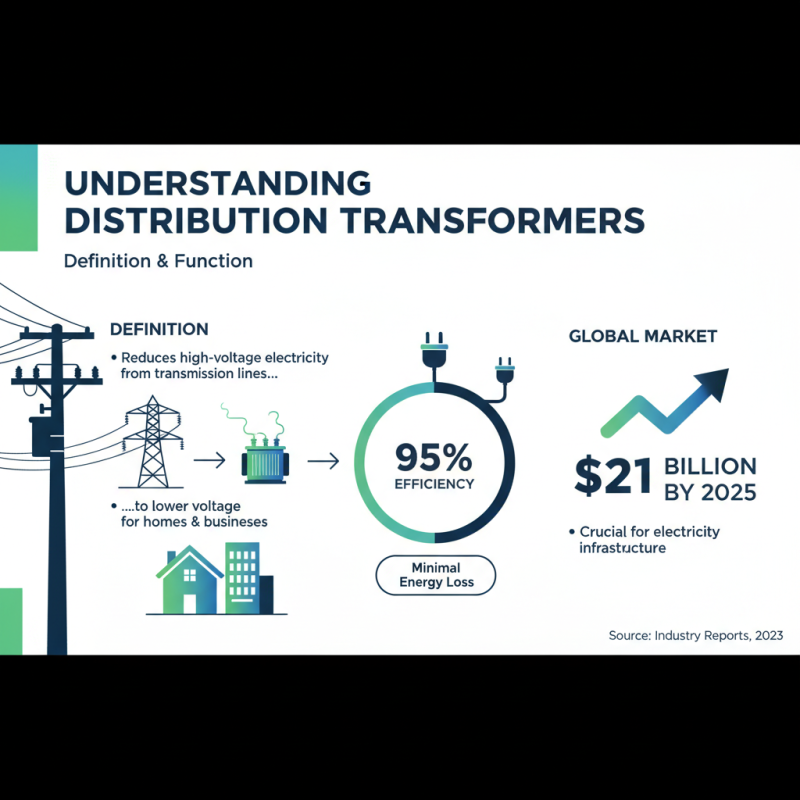
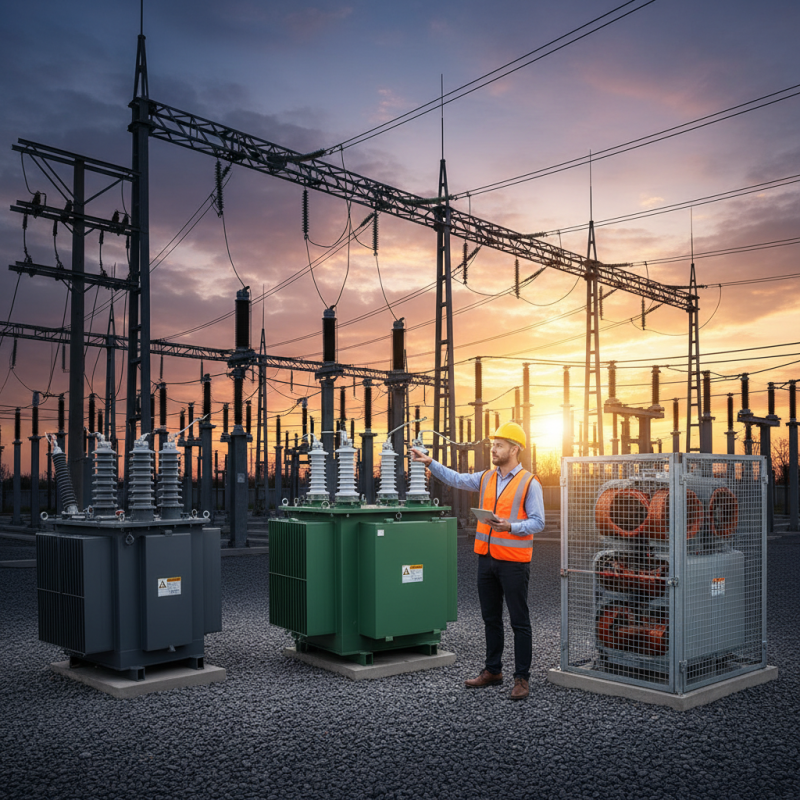
Distribution transformers play a crucial role in power distribution systems. They reduce high voltage electricity from transmission lines to a lower voltage suitable for residential or commercial use. Typically, these transformers operate at 95% efficiency, ensuring minimal energy loss. According to recent industry reports, the global distribution transformer market is expected to reach $21 billion by 2025, highlighting their vital contribution to electricity infrastructure.
Understanding how these transformers function is key for selecting the right one. They consist of primary and secondary windings, magnetic cores, and insulation. The magnetic core allows for efficient energy transfer between windings. A poorly matched transformer can lead to overheating and reduced lifespan. Engineers emphasize the importance of load calculations. This helps ensure the transformer meets temporary and peak demand without compromising performance.
Selecting the right transformer also requires consideration of environmental factors. Temperature, humidity, and altitude can affect efficiency and reliability. A report by the International Electrotechnical Commission suggests that many installations overlook these factors, leading to suboptimal performance. Regular maintenance and monitoring can help identify potential issues early, which is often neglected in practice.
Key Factors to Consider When Selecting Distribution Transformers
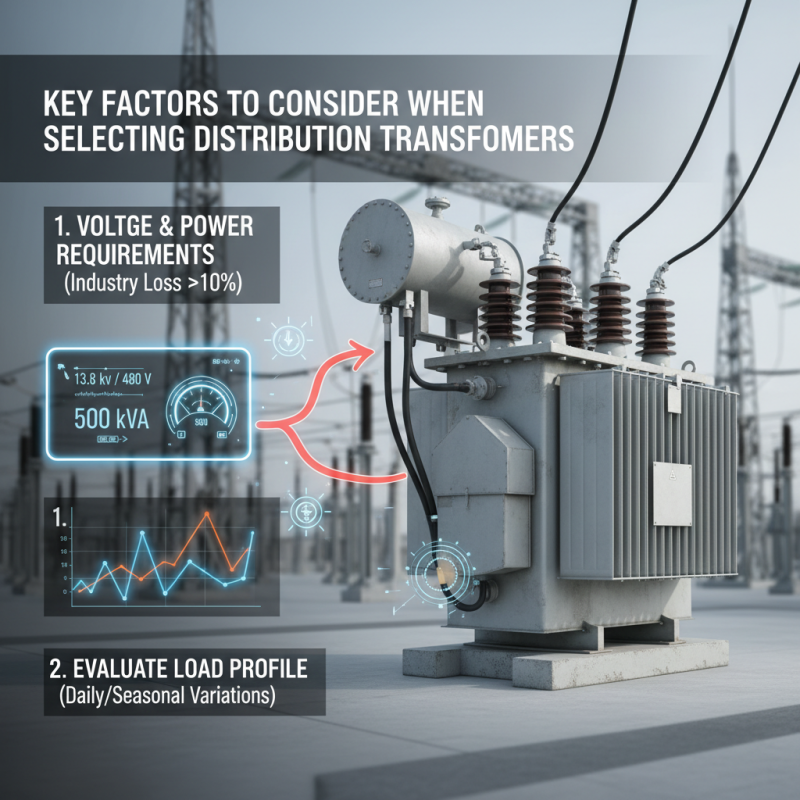
When selecting distribution transformers, several key factors come into play. First, determine the voltage and power requirements for your application. Industry studies indicate that mismatched voltage levels can lead to inefficiencies, with losses sometimes exceeding 10%. Evaluate the load profile as well; understanding daily and seasonal variations is crucial for optimal performance.
Another significant consideration is the distribution transformer’s installation environment. Transformers may differ in their insulation ratings and cooling methods, impacting their longevity and maintenance. Research shows that outdoor transformers often endure harsher conditions, which may influence your choice. Additionally, think about noise levels; many facilities require low-noise options to comply with regulations or avoid disrupting nearby areas.
Finally, assess the available space and accessibility for future maintenance. The installation site should accommodate any potential expansion needs. Many engineers overlook this aspect, leading to costly modifications later on. Always weigh these factors closely to make informed decisions, as the wrong choice can adversely affect operational efficiency and safety. Balancing these considerations can be challenging, but it is essential for effective transformer selection.
Evaluating Load Requirements: Calculating Transformer Ratings
When selecting distribution transformers, understanding your load requirements is essential. Calculating transformer ratings involves several factors, including the expected load and utilization rate. Industry reports indicate that accurately assessing load requirements can enhance efficiency by up to 30%. This means careful calculations can lead to significant energy savings.
To determine the right transformer size, gather data on peak loads. This includes continuous and maximum demand during peak periods. According to the IEEE 1547 Standard, considering future growth is also important. A transformer with a higher rating can accommodate increasing demands. It’s common to overestimate or underestimate transformer ratings, which can lead to underperformance or unnecessary costs.
Performing load calculations is not always straightforward. Users sometimes forget to include diverse load profiles, which can skew results. Balancing load factors is critical; even minor errors can impact end-user satisfaction and efficiency. The empirical rule of thumb recommends sizing transformers to manage 125% of your maximum expected load. This guideline can provide a buffer but should be evaluated carefully against actual data. Always involve a qualified professional to assess specific needs accurately.
How to Choose the Right Distribution Transformers for Your Needs? - Evaluating Load Requirements: Calculating Transformer Ratings
| Transformer Type |
Rated Power (kVA) |
Primary Voltage (V) |
Secondary Voltage (V) |
Efficiency (%) |
Weight (kg) |
| Shell Type |
75 |
11,000 |
400 |
98.5 |
500 |
| Core Type |
150 |
11,000 |
690 |
98.8 |
750 |
| Auto-Transformer |
100 |
7,200 |
480 |
97.0 |
600 |
| Isolated Transformer |
50 |
11,000 |
230 |
99.0 |
300 |
Assessing Efficiency: Importance of Losses in Transformer Selection
When selecting distribution transformers, efficiency is often a crucial factor. Losses in transformers significantly affect operational costs and overall performance. To evaluate efficiency, one must consider load losses and no-load losses, which together determine a transformer's total losses. According to a report by the Electric Power Research Institute, approximately 1.5% to 3% of energy is lost per year due to these inefficiencies.
Load losses occur when the transformer is energized and carrying current. These losses can be minimized by choosing a transformer with high-quality, low-resistance materials. No-load losses, however, are present even when the transformer is not loaded. These are caused by the magnetizing process. A study by the International Energy Agency indicates that the average no-load loss can account for 40% of the total annual energy losses in poorly designed transformers.
Additionally, the importance of efficiency is often overlooked. Some may opt for cheaper, less efficient models to save upfront costs. However, in the long run, this could lead to higher expenses due to increased energy losses. Understanding the trade-offs between initial costs and operational efficiency is vital. Decision-makers should analyze the long-term implications of transformer choice before finalizing their selections.
Transformer Efficiency Assessment
This bar chart illustrates the efficiency levels of various transformers. High efficiency is vital in transformer selection, as it significantly impacts operational costs and environmental sustainability.
Understanding Voltage Levels and Phases in Transformer Systems
When selecting distribution transformers, understanding voltage levels and phases is crucial. Typically, transformers are categorized into single-phase and three-phase systems. Single-phase transformers are suitable for small-scale applications, while three-phase transformers cater to larger, industrial needs. According to the IEEE, three-phase systems can provide more consistent power and efficiency, reducing energy losses by up to 30% compared to single-phase systems.
Voltage levels, ranging from low (up to 1 kV) to medium (1 kV to 36 kV), significantly impact the choice of transformer. For example, a transformer operating at higher voltages can reduce current and minimize energy induced losses. Proper understanding of your operational voltage requirements is key. An inadequate voltage selection may lead to equipment failures or significant operational inefficiencies.
Public data shows that approximately 25% of electrical system failures stem from inadequate transformers. Transitioning to appropriate voltage levels mitigates these risks. Monitoring system conditions regularly can highlight inefficiencies in voltage, prompting necessary adjustments. Balancing voltage levels and phases leads to better power quality, ultimately enhancing system reliability.