How to Choose the Right Wire Terminal Block for Your Electrical Projects?
When embarking on electrical projects, selecting the right Wire Terminal Block is crucial. Paul Johnson, a leading expert in wiring solutions, emphasizes, “The right terminal block can make or break your project.” This statement highlights the significance of careful selection.
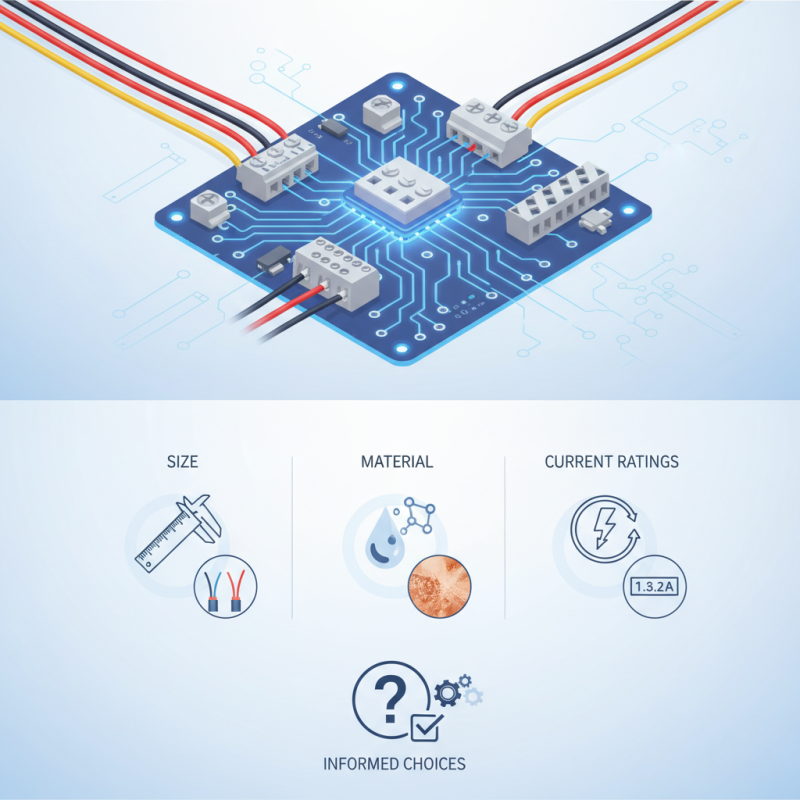
Wire Terminal Blocks serve as essential connectors for various electrical circuits. They ensure safe and reliable connections in diverse applications. However, not all terminal blocks are created equal. It is vital to consider factors such as size, material, and current ratings. Misjudging these elements can lead to failures and costly mistakes.
Many users overlook the importance of compatibility with their specific setups. Choosing a Wire Terminal Block requires a keen eye for detail and an understanding of your project’s demands. It may feel overwhelming. Yet, a sensible approach can lead to effective solutions. Make informed choices for successful outcomes.
Factors to Consider When Selecting Wire Terminal Blocks
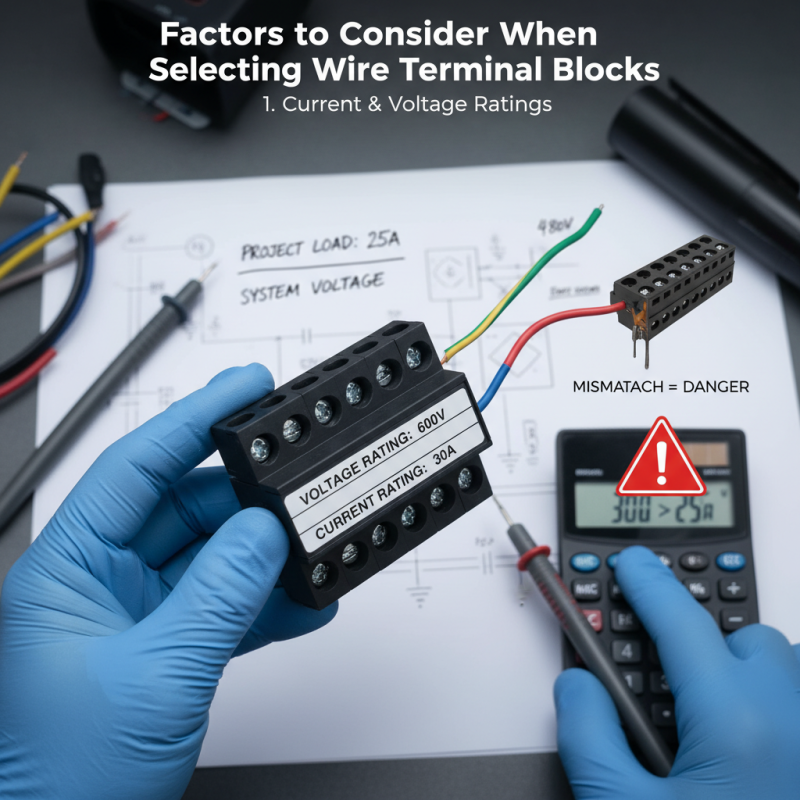
Choosing the right wire terminal block for electrical projects involves careful consideration of several factors. First, assess the current and voltage ratings. These ratings determine how much electrical load the terminal block can handle. A mismatch can lead to overheating and failure. Always opt for terminal blocks that exceed your project's requirements to ensure safety.
Material choice is another critical aspect. Terminal blocks are typically made from plastic or metal. Plastic blocks are lightweight, insulating, and suitable for low-voltage applications. However, metal blocks offer durability and better heat dissipation for high-power needs. Evaluate your environment as well. Corrosive situations may require specially coated blocks.
Finally, think about the connection type. Screw terminals offer simplicity but can become loose over time. Push-in terminals provide solid connections and quick installation. However, they demand careful selection to match wire gauges. Balancing these factors can be tricky. Remember, each project is unique. Reflecting on these considerations will result in wiser decisions.
Types of Wire Terminal Blocks and Their Applications
When working on electrical projects, selecting the right wire terminal block is crucial. Wire terminal blocks come in various types, each serving specific applications. For instance, barrier terminal blocks are great for connecting multiple wires. They are ideal for use in control panels. Their design allows easy wire installation, but remember, they can become cluttered if not organized properly.
Another option is insulated terminal blocks. These offer added safety by preventing accidental short circuits. They are perfect for high-voltage applications. However, ensure they are correctly rated for your specific project. PCB terminal blocks are compact and suited for circuit boards, but their size may pose challenges in tight spaces.
Choosing the appropriate terminal block requires expertise. Always assess the voltage and current ratings needed for your project. Consider environmental factors, too. In humid conditions, corrosion-resistant options are advisable. An often-overlooked detail is the ease of wire termination. Some styles may be easier to connect than others, which can save time on installations.
Types of Wire Terminal Blocks and Their Applications
Understanding Wire Gauge and Its Impact on Terminal Block Choice
Choosing the right wire gauge is crucial for any electrical project. Wire gauge affects current capacity, making it vital to select the proper size. According to the American Wire Gauge (AWG) standard, as the gauge number increases, the wire diameter decreases. For example, 12 AWG wire can safely carry up to 20 amps, while 16 AWG wire is limited to 10 amps. Understanding this can prevent electrical failures and hazards.
Terminal blocks also come with specific ratings based on wire gauge. For instance, many terminal blocks are designed to accept wire sizes from 22 AWG to 10 AWG. If you choose a terminal block that doesn’t match your wire’s gauge, you risk poor connections. Poor connections can lead to overheating and increased resistance. This situation emphasizes the importance of precise alignment between the wire gauge and the terminal block specifications.
It’s not uncommon to see mismatched pairs in electrical projects. Errors in gauging wire size can happen, resulting in significant consequences. Reports indicate that improper connections account for nearly 30% of electrical failures in residential buildings. It's a reminder to double-check specifications when working on any project. Understanding wire gauge is more than numbers; it is about ensuring safety and functionality.
Environmental Conditions That Affect Terminal Block Selection
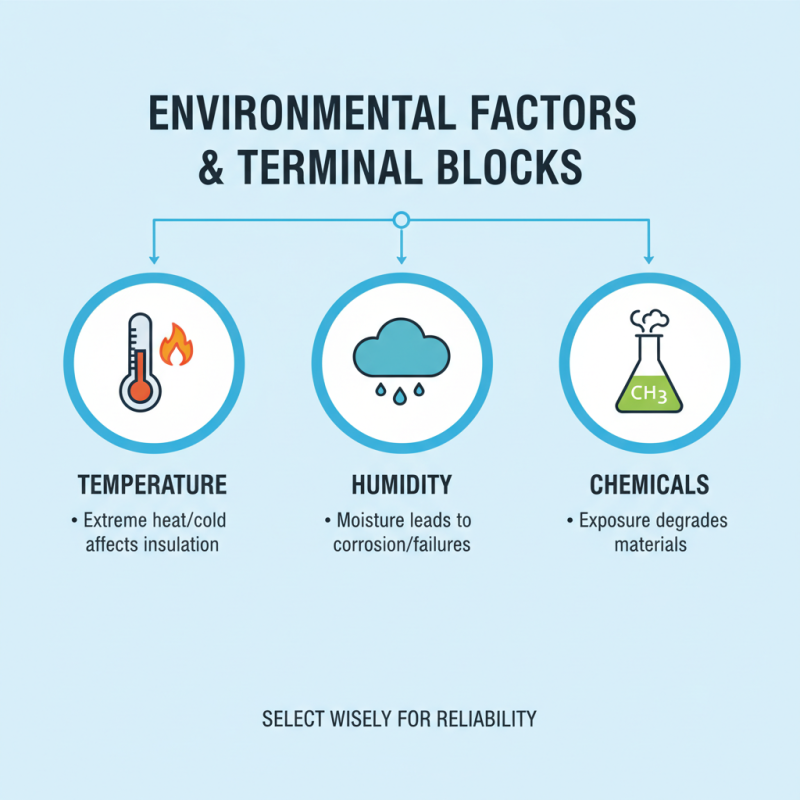
When selecting wire terminal blocks for electrical projects, environmental conditions play a critical role. Factors such as temperature, humidity, and exposure to chemicals can significantly influence the performance of terminal blocks. High humidity can cause corrosion, leading to electrical failures. In contrast, extreme temperatures may compromise the insulating materials used in terminal blocks. It’s vital to assess the specific environmental conditions of your project site.
Consider installations in outdoor or industrial settings. Dust, moisture, and temperature fluctuations are common challenges. Terminal blocks made from robust materials, such as thermoplastics or those designed for harsh environments, are advisable. These materials resist degradation and ensure long-lasting connections. Evaluating the chemical exposure is equally important. Many substances can deteriorate materials quickly. Carefully researching the compatibility of terminal block materials with any nearby harmful substances will help you avoid unexpected failures.
Reflect on your specific needs. Are you prioritizing cost or durability? Sometimes, less expensive options may cost more in the long run due to replacements or repairs. Always weigh the initial investment against potential long-term issues. Maintaining a flexible approach can help in adapting to unexpected challenges, ultimately enhancing the reliability of your electrical systems.
Best Practices for Installing and Maintaining Wire Terminal Blocks
When installing and maintaining wire terminal blocks, it's crucial to consider several best practices. Proper terminal block selection impacts reliability. Make sure the block can handle the electrical load. According to recent industry reports, approximately 30% of electrical failures are linked to improper connections. Use terminals that meet or exceed the needed amperage.
Regular inspection is essential. Look for signs of corrosion or wear. These factors can lead to significant malfunctions. The IEEE suggests checking connections at least once a year for optimal performance. Clean contacts using isopropyl alcohol to ensure better conductivity.
Tips: Use a torque wrench to prevent over-tightening. This can damage the terminal. Mark connections to verify correct placement. Don’t overlook labeling; it saves time during troubleshooting. If any issues arise, don’t hesitate to replace components to maintain safety. This ongoing maintenance ensures the longevity of your electrical systems.
How to Choose the Right Wire Terminal Block for Your Electrical Projects?
| Feature |
Description |
Best Practice |
| Material |
Common materials include plastic and metal, influencing durability and conductivity. |
Choose a material based on the environment (e.g., moisture, temperature). |
| Size |
Terminals come in various sizes to accommodate different wire gauges. |
Select a size that fits the wire gauge for optimum connection. |
| Connection Type |
Includes screw terminals, spring-loaded, and push-in connections. |
Know your project's power requirements to choose the correct connection type. |
| Mounting Type |
Terminal blocks can be mounted on panels or DIN rails. |
Choose based on space and installation requirements. |
| Number of Poles |
Refers to the number of individual terminals in a block. |
Select a pole count that matches the circuit configuration. |
| Voltage Rating |
Each terminal block has a maximum voltage it can handle. |
Ensure the rating exceeds your project's voltage requirements. |
| Maintenance |
Regular checks on connections and tightening if necessary. |
Establish a maintenance schedule to prevent failures. |