What is a Transformer Coil and How Does it Work?
A Transformer Coil is a crucial component in electrical engineering. It plays a significant role in voltage regulation and energy transfer. Understanding its function can unlock insights into various technologies that rely on this device.
The Transformer Coil converts electrical energy with its electromagnetic principles. It allows efficient power transmission over long distances. This process is vital for households and industries. However, mishaps in design or application can lead to inefficiencies. These issues often require careful review and adjustment.
Professionals in engineering must grasp the intricacies of Transformer Coils. It is not merely about construction; it includes understanding core concepts. Insights into its design can prevent common pitfalls. Awareness of these details is essential for innovation in the field.
What is a Transformer Coil?
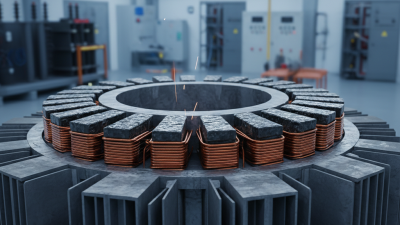
A transformer coil is a critical component in electrical engineering. It consists of wire windings around a core, used to transfer electrical energy between circuits. The coil operates on electromagnetic induction, a principle first described by Faraday in the 19th century. According to the International Energy Agency, transformer coils play a pivotal role in global electricity distribution, with expectations for increases in energy demand by 40% by 2040.
The functionality of a transformer coil lies in its design. The number of turns in the primary and secondary coils determines the voltage transformation. For instance, if the primary coil has 100 turns and the secondary has 50, the voltage is halved in the secondary circuit. This principle ensures electrical systems can adapt to diverse voltage requirements, which is crucial for efficient energy use.
Reports indicate that 70% of electrical energy losses occur in transformers, highlighting the need for improvements.
Despite advancements, challenges remain. Many existing transformer coils still operate below optimal efficiency levels. Regular maintenance and new materials might enhance performance. Research from the Electric Power Research Institute points out that 10% of all transformers in operation may require upgrades. This indicates a need for continuous evaluation and innovation in transformer coil design.
Basic Components of a Transformer Coil
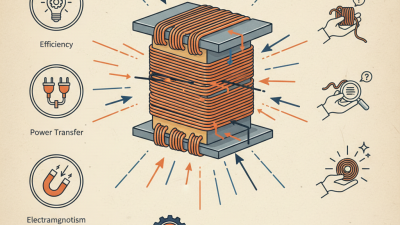
A transformer coil consists of several essential components, each serving a specific purpose. At its core are the primary and secondary windings. These coils are made from conductive materials, such as copper or aluminum. They are wound around a magnetic core, typically formed from laminated silicon steel. This design enhances efficiency by reducing energy loss.
The magnetic core is crucial for the flow of magnetic fields between the primary and secondary coils. It is designed to channel the magnetic flux effectively. Insulation materials are also vital. These prevent short circuits and ensure that the electrical energy transfers safely without any leakage.
While most components are straightforward, the choices made in their design impact overall performance. For example, winding configurations can vary, affecting voltage regulation. Additionally, core material quality influences efficiency. Nevertheless, not all transformer coils perform identically. Testing and quality assurance are necessary to guarantee their reliability in real-world applications. Each design requires careful consideration to meet specific operational needs.
How Transformer Coils Generate Electrical Energy
Transformer coils play a crucial role in generating electrical energy through electromagnetic induction. They consist of two wire coils, known as the primary and secondary coils. When an alternating current flows through the primary coil, it creates a magnetic field. This magnetic field passes through the secondary coil and induces a voltage. This process is vital for energy transfer in power systems.
The efficiency of transformer coils can be influenced by several factors. The wire material, coil design, and core type all play significant roles. High-quality materials can reduce energy loss and increase efficiency. However, not all designs are perfect. Some transformers lose energy as heat. This heat loss is an area for potential improvement and ongoing research. Testing various materials and designs can lead to better performance and reliability.
Transformer coils are essential in various applications. They are used in power distribution, charging systems, and electronic devices. Understanding their operation helps in optimizing electrical energy generation. Yet, every design has limitations. Recognizing these can lead to innovative solutions. Exploring new technologies may enhance efficiency in the future.
The Working Principle of a Transformer Coil
A transformer coil is essential in electrical systems. It converts voltage levels between primary and secondary circuits. The working principle revolves around electromagnetic induction. When alternating current flows through the primary coil, it generates a magnetic field. This field influences the secondary coil, inducing a voltage.
The relationship between the number of turns in each coil affects voltage transformation. If the primary coil has more turns, the output voltage increases. This results in a step-up transformer effect. Conversely, a step-down transformer has more turns in the secondary coil, reducing the voltage. This can lead to inefficiencies, such as heat loss. Even well-designed transformers are not perfect.
One significant challenge is the magnetic coupling. Any misalignment can reduce efficiency. It’s vital to assess such factors in transformer design. Understanding these principles helps in improving electrical systems. The transformer coil's role is crucial in power transmission. It harnesses energy effectively, but concerns of efficiency and loss remain pertinent.
What is a Transformer Coil and How Does it Work? - The Working Principle of a Transformer Coil
| Property |
Description |
| Definition |
A transformer coil is an electrical component that converts alternating current (AC) voltage from one level to another through electromagnetic induction. |
| Components |
Primary coil, secondary coil, core, and insulating materials. |
| Working Principle |
When an AC voltage is applied to the primary coil, it creates a magnetic field that induces a voltage in the secondary coil based on the turns ratio. |
| Turn Ratio |
The ratio of the number of turns in the primary coil to the number of turns in the secondary coil determines whether the transformer steps up or steps down voltage. |
| Applications |
Used in power distribution, power supplies, audio equipment, and many electronic devices. |
| Efficiency |
Typically ranges from 90% to over 99%, depending on design and conditions. |
| Types |
Step-up, step-down, isolation, and autotransformers. |
Applications of Transformer Coils in Modern Technology
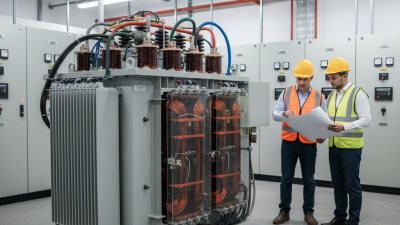
Transformer coils are essential components in various modern technologies. They play a critical role in power distribution and conversion. According to the International Energy Agency, transformer efficiencies have improved significantly, with many achieving over 98% effectiveness. This efficiency is vital for industries relying on reliable energy supply.
In telecommunications, transformer coils enhance signal quality and reduce losses during transmission. For instance, a study by the IEEE reveals that proper transformer design can lead to a 20% increase in data integrity. This improvement is crucial for wireless technology and data centers as they handle massive amounts of information daily.
Tips: Ensure regular maintenance of transformer coils to avoid potential failures. Regular inspections can prolong their lifespan significantly.
Another noteworthy application is in renewable energy systems, particularly in solar inverters. Transformer coils adapt the voltage for optimal energy use, improving system performance. Reports show that integrating high-quality transformer coils can increase solar energy efficiency by up to 15%. Yet, it's essential to recognize that even high-quality coils can suffer from wear and tear, impacting overall functionality.
Tips: Selecting the right transformer coil is vital for maximizing performance in renewable systems. Research various specifications before making decisions.
Applications of Transformer Coils in Modern Technology