China Top 10 Oil Immersed Transformer Manufacturers?
China’s transformer market is broad, and a supplier’s place on any “top 10” list depends on what a project needs. This guide examines leading Chinese manufacturers of the Oil-Immersed Transformer, focusing on practical selection factors: rated capacity, voltage class, cooling method, insulation design, test documentation, delivery capability, and after-sales support. Buyers should compare verified product data and project references, not rely on rankings alone. Details matter. A clear nameplate, complete routine-test reports, and a well-finished tank can tell you more than polished marketing.
Martin J. Heathcote, author of The J & P Transformer Book, is a recognized technical reference in transformer engineering. A practical takeaway from his work, paraphrased rather than presented as a direct quotation, is this: “Sound transformer design depends on matching electrical, thermal, and mechanical requirements to the real operating conditions.” That principle is useful when comparing manufacturers. A unit intended for a humid coastal substation may need different protection and maintenance planning from one serving an indoor industrial plant.
No list can replace technical due diligence. Specifications can look similar while materials, testing scope, and service response differ. Some buyers may also value a nearby service team more than a small price advantage. This comparison aims to help readers ask sharper questions and build a shortlist—not to declare one supplier best for every project. Even the strongest shortlist needs verification.
Oil-Immersed Transformers Explained: IEC 60076 Design and Cooling Principles
China Top 10 Oil Immersed Transformer Manufacturers?
Oil-Immersed Transformers Explained: IEC 60076 Design and Cooling Principles
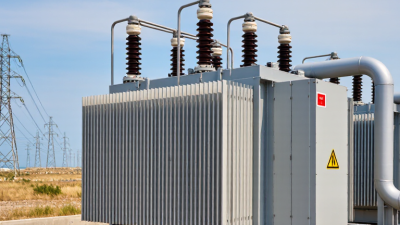
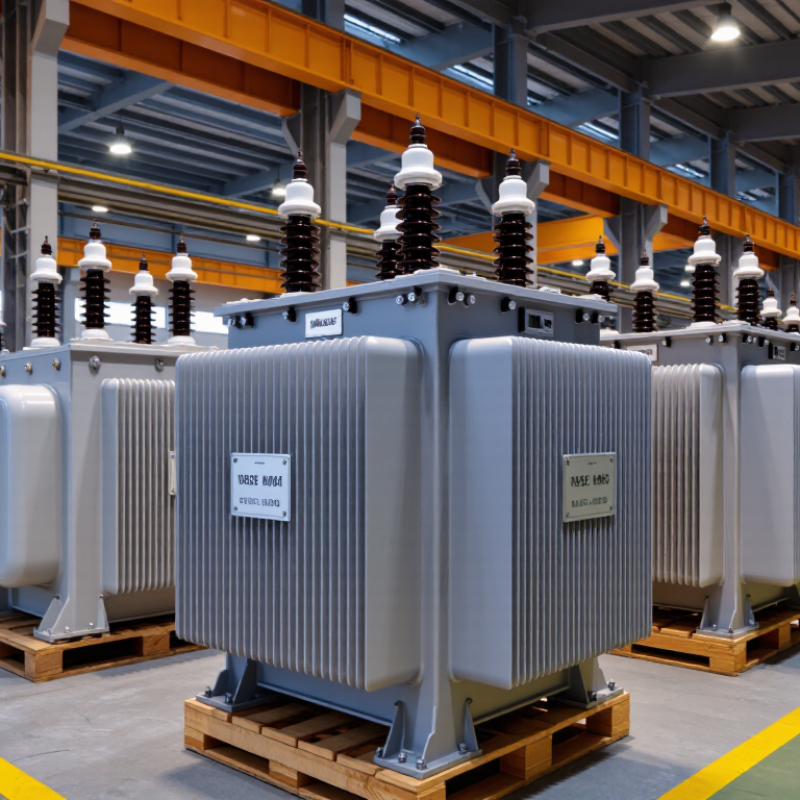
An oil-immersed transformer uses insulating liquid to separate energized parts and carry heat away from the windings. In an ONAN design, oil and surrounding air circulate naturally. ONAF adds fans to increase heat rejection. You can see the principle in the radiator fins: their larger surface releases heat into the room or outdoors. IEC 60076-2:2011 specifies temperature-rise limits for common liquid-immersed designs under defined conditions, including 60 K for top liquid and 65 K for average winding temperature. Actual limits depend on design and service conditions.
Cooling choice affects usable capacity, noise, maintenance, and performance during hot weather. The International Energy Agency’s 2023 report, Electricity Grids and Secure Energy Transitions, says annual grid investment needs to exceed US$600 billion by 2030—roughly double recent levels. This wider grid expansion makes dependable transformer design more important, though the figure is not transformer-specific. A rating plate is useful, but it cannot describe every site condition. Dust-blocked radiators or poor airflow can undermine otherwise sound calculations.
Tips: Check cooling codes, oil temperature, radiator cleanliness, and fan operation during routine inspections. Compare operating conditions with the manufacturer’s limits; standards alone do not predict every installation’s real-world performance.
China’s 50 Hz Distribution Market: Common 10/0.4 kV Transformer Ratings
China’s 50 Hz distribution market commonly uses 10/0.4 kV oil-immersed transformers rated at 100, 160, 200, 250, 315, 400, 500, 630, 800, and 1,000 kVA. GB/T 6451-2015 sets technical requirements and standard capacity series for three-phase oil-immersed transformers. Actual utility schedules vary. A small workshop may need 100–250 kVA, while mixed-use buildings often require larger units after engineers assess peak demand, motor starting, and future loads. Small details matter.
The China Electricity Council reported national electricity consumption of 9.22 trillion kWh in 2023, a 6.7% year-on-year increase, in its 2023–2024 power supply and demand outlook. That figure describes the whole country; it does not determine an individual transformer rating. Site measurements do. Engineers should check load diversity, ambient temperature, ventilation, and expected expansion before selecting capacity. A 315 kVA unit can look adequate on paper, yet run close to its limit during a hot evening peak. Conversely, oversizing adds cost and may reduce efficient operation at light load. The neat rating ladder helps, but it cannot replace a measured load profile. Not always.
How to Compare China’s Top 10 Manufacturers by Capacity, Voltage, and Test Data
When comparing China’s top ten oil-immersed transformer manufacturers, start with matched specifications, not catalogue claims. A 10 MVA distribution unit and a 100 MVA grid transformer demand different equipment, skills, and factory space. Ask for continuous and peak production capacity, typical monthly output, and recent delivery records for the same design class. Numbers need context.
Compare voltage range, rated power, vector group, impedance, and insulation levels as one package. A 35/10 kV unit is not comparable to a 110/11 kV unit by voltage alone. Check whether the manufacturer can provide drawings, loss guarantees, temperature-rise limits, and cooling details before quotation. Small omissions matter.
Test evidence separates a capable factory from a polished brochure. Request sample routine-test reports showing winding resistance, ratio, polarity or vector group, impedance, no-load and load losses, and applied-voltage tests. Confirm applicable GB or IEC editions, plus whether type or special tests used a matching design. Review instrument calibration dates and report traceability. A witnessed test can help, but it cannot replace clear acceptance criteria. Published figures may describe a best-case model, not the unit you will receive. Ask for the serial-linked final report and resolve any gap before shipment.
China’s Top 10 Oil-Immersed Transformer Manufacturers: Comparing Capacity, Voltage, and Test Data
This chart shows common nominal network voltage levels used as a reference when comparing transformer offerings. It is not a manufacturer ranking: rated capacity and test results should be checked against each manufacturer’s technical datasheets and verified test reports.
Efficiency and Compliance: GB 20052-2020 Classes and IEC 60076 Requirements
For a credible oil-immersed transformer shortlist, compare efficiency at the same rated capacity, voltage, and impedance. China’s GB 20052-2020 sets minimum energy-efficiency values and grades for covered transformers; Grade 1 represents the highest efficiency. Loss limits vary by transformer type and rating, so a grade alone is not a complete comparison. Check the declared no-load and load losses against the applicable table. Small details matter.
IEC 60076 provides the core international requirements for power transformers. Its parts address general conditions, temperature-rise limits, insulation levels, and short-circuit withstand. Ask for test records showing the specified test methods and measured results, not only a compliance statement. In practice, compare temperature-rise and dielectric-test reports with the offered design. A tidy certificate cannot replace traceable test data.
Efficiency has long-term consequences. The U.S. Department of Energy’s 2024 distribution-transformer rule analysis projected cumulative savings of 10.9 quadrillion Btu over 30 years under its adopted standards. That estimate concerns the U.S. market, not China, but it shows why loss reductions deserve attention. For procurement, verify losses at stated test conditions and review cooling, ambient-temperature, and loading assumptions. Some comparisons still hide these assumptions. That deserves a second look.
Supplier Selection: Rated Capacity, Impedance, Temperature Rise, and Service Support
Rated capacity should reflect the actual load curve, not only the nameplate peak. Record daily demand, motor-starting currents, seasonal peaks, and expected expansion. A unit selected too tightly may run hot; excessive oversizing can also waste capital and complicate protection settings. IEA’s 2023 report, Electricity Grids and Secure Energy Transitions, says annual grid investment must exceed US$600 billion by 2030, nearly double recent levels. That pressure makes dependable transformer procurement more important, but it does not replace site-specific calculations.
Check impedance against both fault levels and voltage regulation. A higher value can limit fault current, yet may increase voltage drop under load. For many conventional liquid-immersed designs, familiar temperature-rise limits are 60 K for top liquid and 65 K for average winding, under IEC 60076-2; confirm the applicable edition and specification. Ask suppliers for guaranteed test results, cooling details, insulation data, and clear tolerances. Small omissions matter. Service support deserves equal scrutiny: define response times, commissioning assistance, oil-testing guidance, and spare-part availability before purchase. One awkward lesson from projects is that a technically sound unit can still cause avoidable downtime when support arrangements remain vague. Request named escalation contacts and written repair procedures, not just a broad service promise.