Digital Tips for Choosing the Right Converter Transformer for Your Needs?
Choosing the right converter transformer can be a daunting task. Many factors come into play, making the decision process challenging. A converter transformer is essential for voltage conversion in various applications. Knowing what to look for can save time and money.
Understanding your specific needs is crucial. You should consider the power requirements, size, and type of load. Miscalculating any of these factors can lead to inefficient operation. Often, people overlook the importance of consulting with experts. Their insights can guide you toward the best options available.
It's also vital to assess the reliability of the source. Not every supplier offers quality products. Reviews and ratings can provide helpful insights. An informed decision can prevent future problems. Yet, many still ignore this aspect. Investing in a reliable converter transformer pays off in the long run.
Understanding the Functionality of Converter Transformers
Converter transformers play a crucial role in energy management. They change one voltage level to another, ensuring devices receive the power they need. Understanding their functionality can help you select the right type for your application.
When selecting a converter transformer, consider the input and output voltage requirements. Clarity in these specifications is essential. Miscalculations can lead to inefficiencies or equipment damage. Moreover, look for transformers with built-in protection features. These guard against potential overloads and short circuits.
Pay attention to the transformer’s efficiency rating. Higher efficiency means less energy loss and lower bills. Not all transformers are created equal, and some may perform better in specific scenarios. Carefully analyze your power demands to avoid mismatches that could hamper performance. Remember, a thorough understanding of converter transformers enhances your decision-making process.
Understanding the Efficiency of Different Converter Transformers
Types of Converter Transformers and Their Applications
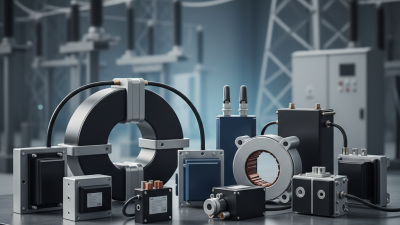
When selecting a converter transformer, understanding the types available is vital. There are several types: step-up, step-down, and isolation transformers. Step-up transformers increase voltage, which is crucial for long-distance power transmission. Conversely, step-down transformers decrease voltage for local distribution or equipment operation. Isolation transformers maintain safety by separating circuits, protecting sensitive devices from noise or spikes.
According to a recent industry report, the demand for isolation transformers is expected to grow by 6% annually. This rise is due to increasing data center infrastructures requiring reliable power supply. Alternatively, step-up transformers are gaining traction in renewable energy applications, especially in wind and solar power installations. These trends highlight the growing complexity of electrical systems.
Investors and engineers face challenges when choosing the right transformer. Factors like load capacity and application type are critical. A mismatch can lead to inefficiencies or equipment damage. It's essential to evaluate these aspects thoroughly. Ignoring them might result in costly errors. Seeking expert guidance can provide clearer insights. The market’s evolving nature demands a proactive approach in selection, ensuring long-term reliability and performance.
Key Specifications to Consider When Selecting a Transformer
Choosing the right converter transformer requires careful consideration of key specifications. The power rating is essential. It dictates how much load the transformer can handle. Ensure this rating exceeds your needs. An undersized transformer can lead to inefficiencies and potential failures. Consider both voltage and current ratings too. These parameters must match your application precisely.
Another critical aspect is the frequency rating. Most systems operate at either 50 Hz or 60 Hz. Choosing a transformer with the wrong frequency can cause operational issues. Look into the efficiency rating as well. A more efficient transformer will save energy and reduce costs over time. Pay attention to build quality and materials used. Higher quality components often translate to longer life spans.
Lastly, always consider safety features. Overvoltage protection, grounding options, and thermal management systems are vital. These features can prevent accidents and ensure reliability. Misjudgments in these areas can lead to system failures or even hazards. Take the time to research and reflect on these specifications before making a purchase. Each detail matters in ensuring optimal performance and safety in your applications.
Assessing Your Power Requirements and Load Characteristics
When selecting a transformer, understanding your power requirements is essential. Industry reports indicate that improper sizing accounts for nearly 30% of transformer failures. An accurate load assessment helps you avoid unnecessary costs and downtime. To determine your power needs, start by calculating your total wattage. Consider both continuous and peak loads.
Load characteristics can significantly influence efficiency. Non-linear loads, like computers or LED lighting, may cause harmonics that impact transformer performance. A transformer should be selected based on its ability to handle these conditions. According to the Electrical Power Research Institute, transformers operating under stress can lose up to 10% efficiency.
Regularly monitoring load conditions is vital. Load variations can shift, making it crucial to reassess transformer capabilities. An undersized transformer leads to overheating, while an oversized one can incur higher operational costs. The National Electrical Manufacturers Association recommends periodic evaluations to ensure current and projected needs align with transformer specifications. Keeping these factors in mind aids in making informed decisions.
Evaluating Efficiency and Performance Metrics in Transformers
When selecting a converter transformer, understanding efficiency and performance metrics is crucial. Efficiency measures how well a transformer converts input power to output power, typically expressed as a percentage. According to the IEEE Standards Association, most modern transformers achieve efficiencies above 95%. However, older models can fall below 90%, leading to energy waste and higher operating costs.
Performance metrics also include load capacity and voltage regulation. Transformers must operate efficiently under varying loads. A report from the International Energy Agency highlights that poor regulation can cause voltage fluctuations, affecting device performance. Evaluating these metrics ensures that businesses choose transformers that meet their operational needs without sacrificing reliability.
Tips: Always check the datasheet for detailed specifications. Look for units with low no-load losses. Perform a lifecycle cost analysis. It reveals potential hidden costs over time. Regular maintenance is essential for optimal performance. Neglecting it can lead to unexpected failures and costs. Remember, the right transformer can significantly impact energy efficiency and operational reliability.
Digital Tips for Choosing the Right Converter Transformer for Your Needs – Evaluating Efficiency and Performance Metrics in Transformers
| Transformer Type |
Power Rating (kVA) |
Efficiency (%) |
Voltage Input (V) |
Voltage Output (V) |
Weight (kg) |
Temperature Rise (°C) |
| Isolation Transformer |
10 |
98.5 |
220 |
110 |
20 |
40 |
| Step-Down Transformer |
15 |
97.0 |
400 |
220 |
25 |
45 |
| Step-Up Transformer |
20 |
96.5 |
230 |
460 |
30 |
50 |
| Auto Transformer |
25 |
98.0 |
480 |
240 |
40 |
55 |
| Three-Phase Transformer |
50 |
95.5 |
400 |
230 |
60 |
60 |