How to Choose the Right Control Transformers for Your Needs?
Choosing the right control transformers is crucial for any electrical project. Experts in the field emphasize this importance. John Smith, a leading authority in electrical engineering, once said, "Selecting the appropriate control transformers can significantly impact system efficiency." His insight highlights a common challenge faced by professionals.
Control transformers serve various purposes, powering control circuits and providing isolation. However, many users overlook critical factors such as voltage ratings and load requirements. Choosing poorly can result in equipment failure, leading to costly downtime. It's essential to evaluate specifications carefully and consider application-specific needs.
Understanding the types of control transformers available can aid decision-making. Some transformers excel in certain conditions, while others may not meet reliability standards. This reflection prompts us to analyze the unique requirements of each application closely. Ultimately, the right choice will not only enhance system performance but also ensure safety and longevity.

Understanding Control Transformers: Definition and Purpose
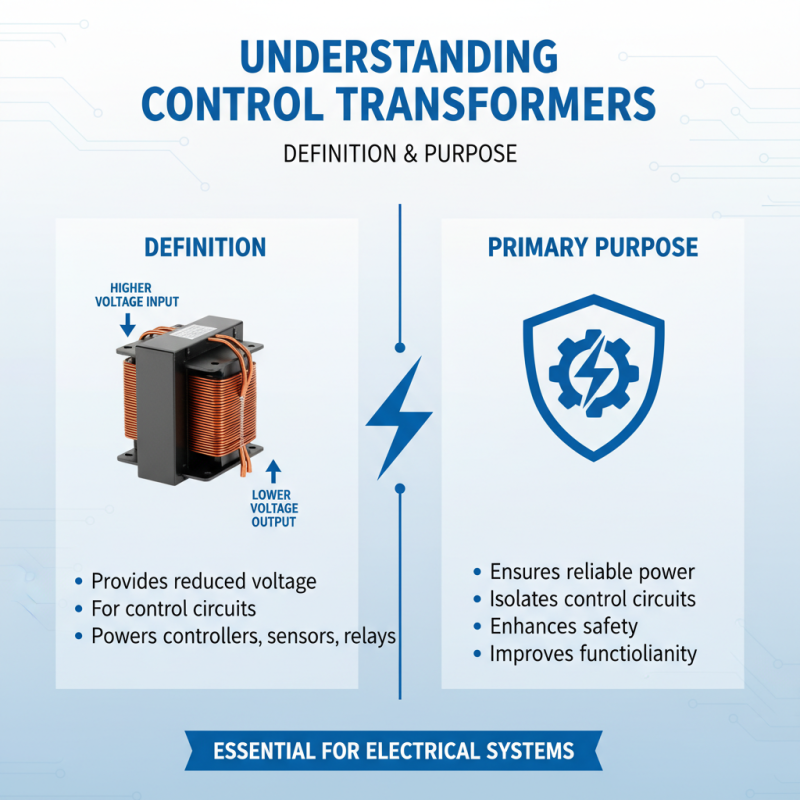
Understanding control transformers is essential for various applications in electrical systems. A control transformer is a type of transformer specifically designed to provide a lower voltage for control circuit equipment. Its primary purpose is to ensure reliable power for controllers, sensors, and relays. These transformers help isolate control circuits from higher voltage systems, enhancing safety and functionality.
When selecting control transformers, consider voltage rating and application. This ensures compatibility with your control devices. Review the current capacity to avoid overload situations. An underrated transformer may overheat or fail, leading to equipment downtime or damage.
Tips: Always assess your load requirements. It's better to choose a transformer with a slightly higher capacity. Additionally, check for necessary certifications, ensuring safety and performance standards are met. Trustworthy suppliers will provide essential documentation about their products. Failure to do this can lead to unexpected issues later. Remember, even small miscalculations can have significant impacts.
Key Factors to Consider When Selecting Control Transformers
Choosing control transformers can be challenging. Understanding key factors helps simplify the decision. First, consider voltage requirements. Determine the input and output voltages essential for your equipment. This ensures compatibility and optimal performance.
Next, evaluate the power rating. Control transformers come in various ratings. Select one that meets your load requirements. Overloading a transformer can lead to inefficiencies and potential failures. Also, think about the physical size. Space limitations may impact your selection. A compact design might be necessary if space is tight.
Finally, look into the environment where the transformer will operate. If it's in a harsh location, consider protection against dust and moisture. The material quality influences durability. Reflecting on these aspects helps in choosing the right transformer for your specific needs. Each factor plays a role in operation. Missing any might lead to issues.
Control Transformers Selection Criteria
Types of Control Transformers and Their Applications
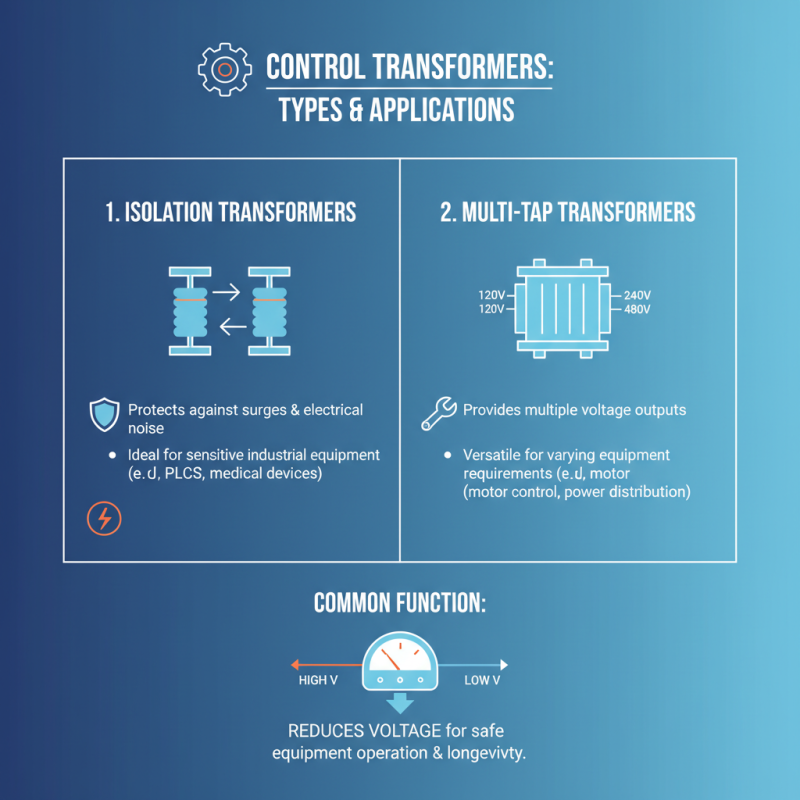
When selecting control transformers, understanding their types and applications is crucial. Control transformers mainly serve to reduce voltage levels for various electrical equipment, enabling safe operation. There are several types, including isolation transformers and multi-tap transformers. Isolation transformers offer protection against surges and electrical noise. This type is ideal for sensitive equipment in industrial settings, helping increase device longevity.
Multi-tap transformers, on the other hand, cater to dynamic voltage needs. They provide multiple output levels, accommodating varying requirements. This flexibility is essential in manufacturing environments where voltage levels fluctuate frequently. According to industry reports, proper transformer selection can reduce equipment failure rates by up to 30%.
**Tip:** Always consider the voltage and current requirements of your application before choosing a transformer. Insufficient ratings can lead to overheating and failures.
Another consideration is the installation environment. Harmful conditions can impact transformer lifespan. Look for transformers designed for specific environmental challenges like humidity or dust exposure. They often feature robust enclosures protecting internal components.
**Tip:** Regular maintenance checks are vital. They can extend the transformative life, saving costs in the long term. Being proactive ensures reliable performance and safety in your electrical system.
Sizing Control Transformers for Optimal Performance
When sizing control transformers, it’s crucial to consider the load requirements. A control transformer must be able to handle the full load current without overheating. According to industry standards, the transformer’s capacity should generally be at least 125% of the total load current. This safety margin helps ensure optimal performance.
Voltage drops also play a significant role in transformer sizing. A voltage drop of more than 5% can affect operational efficiency. This is particularly important in systems with long cable runs or high-demand applications. Transformer selection should factor in all potential drops to maintain voltage stability.
Moreover, the environment where the transformer operates can influence its sizing. High temperatures or humidity levels can impede efficiency. While many transformers are rated for specific operating conditions, it is essential to assess these factors closely. Reflecting on these points prevents potential failures and enhances performance longevity.
Installation and Maintenance Tips for Control Transformers
When installing control transformers, proper setup is crucial for performance and safety. Industry reports indicate that improper installation can lead to inefficiencies. Ensure that the transformer is mounted securely to prevent vibrations. Vibration can affect lifespan and reliability. Always follow the manufacturer’s guidelines for mounting and connection.
Routine maintenance is equally important. Regularly check for signs of overheating. Overheating can indicate electrical issues that need immediate attention. Clean the transformer’s exterior to prevent dust accumulation. Dust can hinder heat dissipation. It’s essential to conduct periodic inspections, particularly if the transformer is in a dusty environment.
Tips: Use thermal imaging to check for hot spots during inspections. Document all maintenance activities for better tracking. Always disconnect power before servicing the transformer. This ensures safety during maintenance. Remember, even small oversights can lead to significant problems. Stay vigilant and prioritize regular checks to maintain optimal function.
How to Choose the Right Control Transformers for Your Needs? - Installation and Maintenance Tips for Control Transformers
| Transformer Type |
Voltage Rating (V) |
Power Rating (kVA) |
Phase |
Installation Environment |
Maintenance Frequency |
| Step-Down Transformer |
480/24 |
5 |
Single |
Indoor |
Annually |
| Isolation Transformer |
230/115 |
3 |
Single |
Indoor |
Semi-Annually |
| Control Transformer |
600/120 |
10 |
Three |
Outdoor |
Quarterly |
| Auto-Transformer |
480/240 |
15 |
Single |
Indoor |
Bi-Annually |
| Phase Converter |
230/208 |
7.5 |
Three |
Indoor |
Monthly |