Leave Your Message

10 Essential Tips for Understanding Current Transformers

Understanding Current Transformers is crucial for anyone working in electrical engineering or power distribution. These devices, essential for measuring high currents, provide valuable insights into electrical systems. By stepping into this topic, we will explore important aspects that underline their significance.

A Current Transformer (CT) transforms high current levels into manageable values. This allows for safe measurement and monitoring, ensuring system accuracy. However, many face challenges when interpreting CT data. This can lead to potential miscalculations or oversights. With the right understanding, these pitfalls can be avoided.

In this guide, we will outline ten essential tips that enhance your proficiency with Current Transformers. Gaining practical knowledge will bolster your confidence in handling them. Practical insights, backed by expertise, will make this journey informative. Each tip serves to strengthen your foundation and understanding while encouraging a critical view of common practices. As we delve deeper, let's reflect on our current understanding and areas for improvement.

10 Essential Tips for Understanding Current Transformers

Introduction to Current Transformers and Their Importance

Current transformers (CTs) play a crucial role in electrical engineering, particularly in power systems. They ensure accurate measurement of electric currents, typically for protective relaying and monitoring. According to a recent industry report, the global current transformer market is projected to reach $5.5 billion by 2026, reflecting their importance in modern energy systems.

Understanding CTs requires acknowledging some essential tips. First, always recognize their application in high voltage systems. These transformers scale down high currents to lower, manageable levels. This makes them safe and effective for metering and protecting electrical circuits. Secondly, regular calibration is vital. A miscalibrated CT can lead to inaccurate readings, causing potential safety hazards. Peer-reviewed studies emphasize that periodic checks can enhance reliability by 25%.

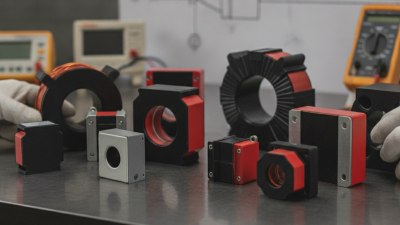
Another tip involves recognizing the types of current transformers. There are wound, bar-type, and split-core CTs. Each has its unique benefits and ideal applications. Familiarizing yourself with these can improve design choices. For instance, split-core types are user-friendly for retrofitting existing installations. This adaptability is critical in evolving electrical environments. Understanding these nuances in CT design helps engineers make informed decisions.


Basic Principles of Operation for Current Transformers

Current transformers (CTs) play a vital role in electrical systems by providing accurate current measurement. Their operation relies on magnetic principles. The basic structure consists of a primary winding, a core, and a secondary winding. When current flows through the primary winding, it generates a magnetic field around the core. This field induces a current in the secondary winding, allowing safe measurement of high currents.

Understanding the ratios in CTs is crucial. The turns ratio determines the scaling of the current. For example, a 100:5 ratio reduces 100A to 5A. This transformation enables measurement equipment to handle low voltages safely. However, mismanagement of the turns ratio can lead to inaccurate readings. Users must ensure proper alignment with the system’s requirements.

Calibration is another key aspect. Regular testing helps maintain reliability. Without proper calibration, even small errors can accumulate over time. Users should be diligent in monitoring CT performance. Addressing discrepancies promptly ensures optimal functionality. Regular assessments reveal insights into their operation, fostering improved understanding in users.

Key Components and Construction of Current Transformers

Understanding current transformers (CTs) involves knowing their key components and construction. Primarily, a current transformer consists of a primary winding, a secondary winding, and a magnetic core. The primary winding is connected to the high-voltage circuit, while the secondary winding produces a scaled-down current for measurement. The magnetic core enhances the coupling between windings, ensuring accurate operation.

When selecting a current transformer, consider the burden rating. This rating indicates the maximum load on the secondary side, influencing the transformer's accuracy. A mismatch may lead to errors in readings. Also, look for insulation type. Proper insulation prevents breakdown and maintains reliability. Don’t overlook the dimensions of the current transformer. Ensure that it fits within the installation space.

For effective use, monitor temperature and environmental conditions. High humidity or extreme temperatures can degrade transformer performance. Check connections regularly to prevent unwanted resistance. Always remember that thorough documentation is vital for maintenance and troubleshooting. Understanding these components will improve your knowledge and enhance system reliability significantly.

10 Essential Tips for Understanding Current Transformers - Key Components and Construction of Current Transformers

Tip Number Tip Description Key Components Construction Details
1 Understand the basic operation principle of current transformers. Core, Primary Winding, Secondary Winding Typically made of silicon steel laminations for efficiency.
2 Know the importance of ratio in CTs. Turns Ratio, Insulation Resistance Determines accuracy and scaling of measurements.
3 Explore the different types of current transformers. Toroidal, Window, Bar CTs Design varies based on application requirements.
4 Learn about the safety measures when using CTs. Secondary Circuit Protection, Insulation Ensures operator safety and prevents equipment damage.
5 Consider load testing for accuracy. Calibration Equipment, Load Ranges Ensures the transformer operates correctly under load.
6 Identify the impact of temperature on performance. Thermal Rating, Temperature Coefficient Affects the accuracy and lifespan of CTs.
7 Familiarize yourself with the primary and secondary circuits. Input Voltage, Output Signal Understanding connection is crucial for measurement.
8 Recognize the effects of overloading. Saturation, Harmonics Can lead to inaccurate readings or damage.
9 Understand the role in metering and protection systems. Measurement Accuracy, Relay Activation Critical for grid stability and protection.
10 Regular maintenance checks and inspections. Visual Inspections, Functional Tests Ensure operational reliability and performance.

Common Applications and Uses of Current Transformers

Current transformers (CTs) are critical in monitoring and measuring electrical currents in various applications. They play a vital role in power generation, distribution, and industrial processes. According to a recent report by the International Electrotechnical Commission (IEC), the demand for current transformers is projected to grow by 5.6% annually in the coming years. This increasing demand highlights their significance in today's energy landscape.

In substations, current transformers are essential for protecting equipment from overloads. They help in measuring electrical currents accurately. Understanding their operation can enhance system reliability. One tip is to always select CTs with the correct rating for your application. Miscalculating ratings can lead to inaccurate measurements and system failures. Another tip is to regularly calibrate CTs to maintain their accuracy. Reporting discrepancies could save considerable costs over time.

Current transformers are also widely used in smart grids. They enable real-time monitoring of electricity consumption. Enhanced data collection helps optimize energy usage. This growing trend aligns with the global push for more sustainable energy practices. Many industries are integrating CTs into their operations to boost efficiency and reduce waste. Awareness of such applications can drive innovation and better energy management solutions.

Safety Considerations and Maintenance for Current Transformers

Current transformers are essential in electrical systems but require careful handling. Safety is paramount when working with these devices. Always de-energize the system before installation or maintenance. High voltage can cause severe injuries or even fatalities. Grounding is critical to preventing electric shocks. Ensure all workspaces are clear of clutter and distractions.

Regular maintenance is necessary for optimal performance. Inspect the wiring and connections routinely. Look for signs of wear or corrosion. These issues can lead to inaccurate readings. If you notice abnormalities, consider recalibrating or replacing components. Keeping a detailed log of maintenance activities helps track the condition of the transformers. Engaging in ongoing education about current transformer technologies is also beneficial.

Recognizing potential risks is key. Overloading can lead to overheating, which may compromise the transformer's integrity. Be aware of the environment where your transformers operate. Extreme temperatures or humidity can negatively impact their functionality. When in doubt, consult with experienced professionals in the field. Their insights can provide valuable guidance and help mitigate risks.